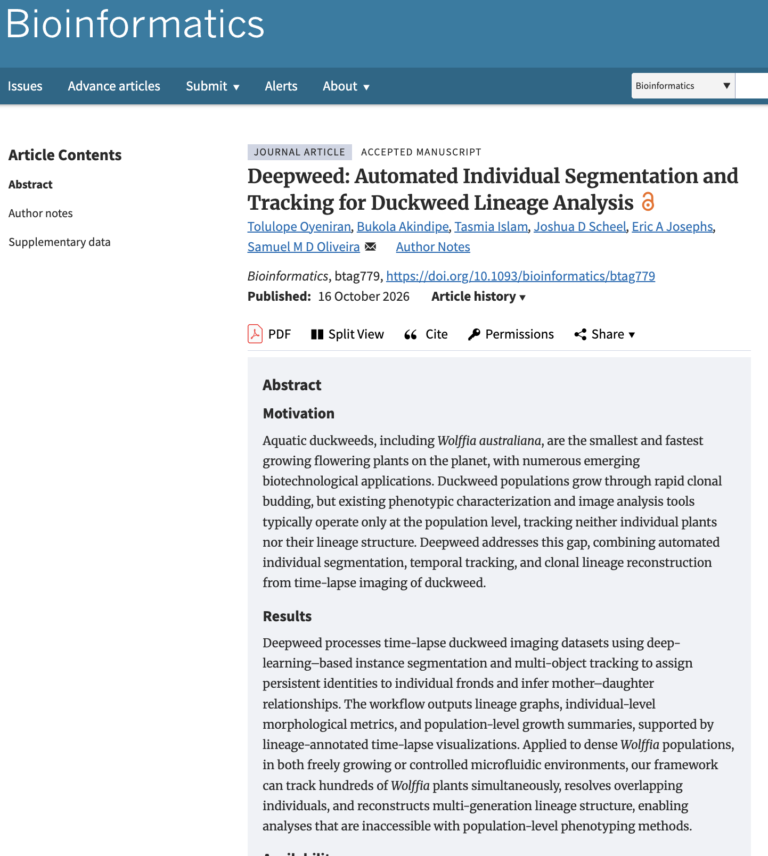
We’re excited to share that our paper, “Deepweed: Automated Individual Segmentation and Tracking for Duckweed Lineage Analysis,” is now published in Bioinformatics!Duckweeds like Wolffia australiana are the smallest and fastest-growing flowering plants on Earth, with growing potential in biotechnology. They multiply through rapid clonal budding, yet most existing image analysis tools only measure growth at the population level, missing individual plants and the family trees connecting them.Deepweed is a framework that fills that gap. Using
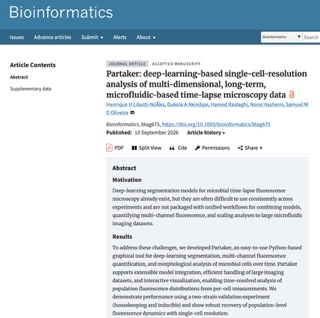
We're excited to share that our paper, "Partaker: deep-learning-based single-cell-resolution analysis of multi-dimensional, long-term, microfluidic-based time-lapse microscopy data," is officially published in Bioinformatics! This one has been a long time in the making, and we couldn't be more excited to finally share it. Partaker brings deep-learning segmentation, multi-channel fluorescence quantification, and scalable analysis together into one unified pipeline, solving a problem that's...
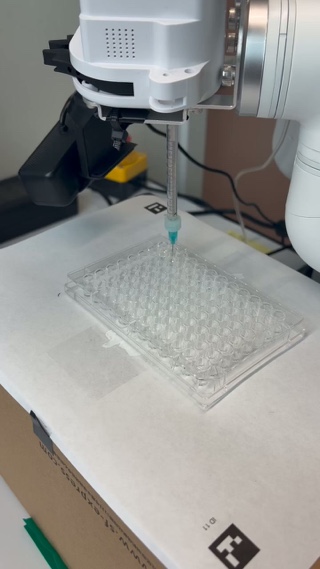
The Oliveira Lab is exploring robotic automation as part of our effort to build more autonomous experimental workflows. Our latest setup uses a robotic arm to perform repeatable sampling tasks, creating a foundation for integrating automated sample collection with microbial experiments. By coordinating the robotic arm with experimental hardware and software, we are working toward systems that can collect samples at defined locations and time points with less manual intervention. This could...
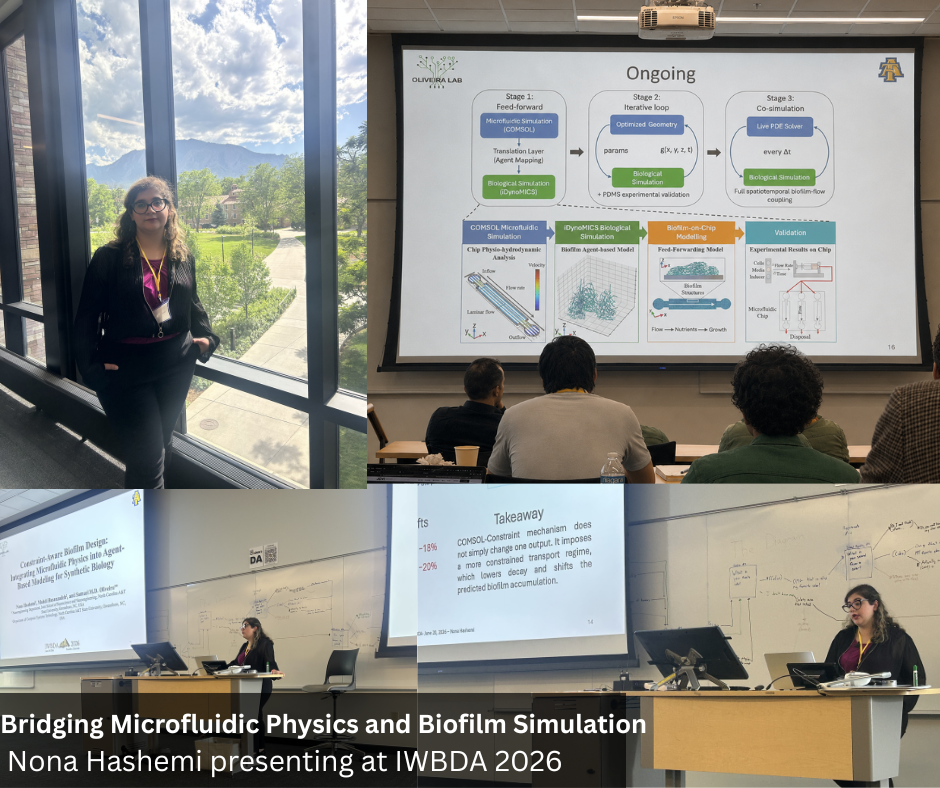
Nona Hashemi presented work integrating microfluidic physics with agent-based biofilm simulation at the International Workshop on Biodesign Automation. Oliveira Lab Ph.D. candidate Nona Hashemi presented “Constraint-Aware Biofilm Design: Integrating Microfluidic Physics into Agent-Based Modeling for Synthetic Biology” at the International Workshop on Biodesign Automation 2026 (IWBDA 2026) in Boulder, Colorado. Her talk focused on a biofilm-on-chip modeling framework that connects COMSOL-based...
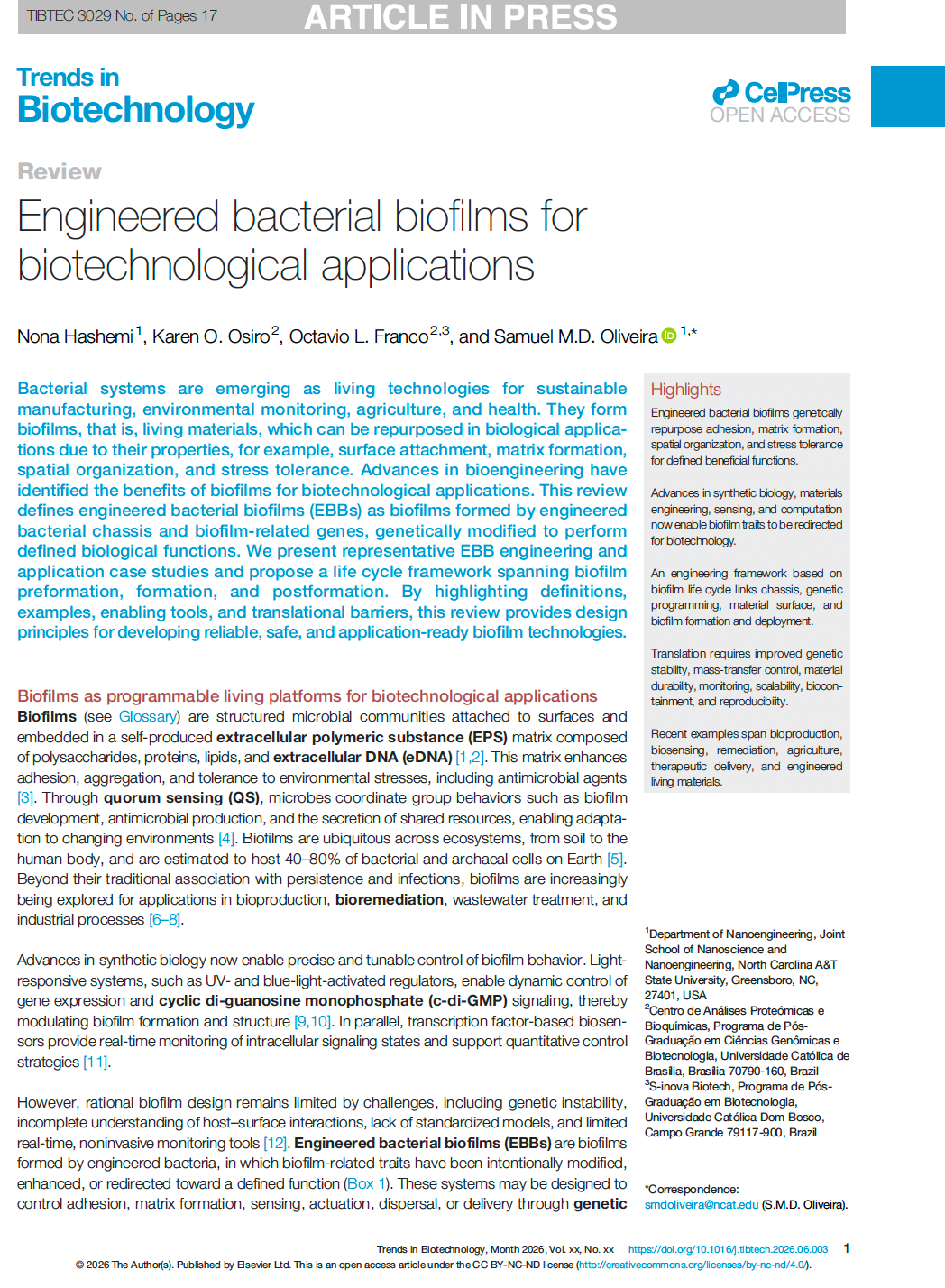
We are pleased to share that our review article, “Engineered bacterial biofilms for biotechnological applications,” is now available online in Trends in Biotechnology. This review highlights how engineered bacterial biofilms can be developed as programmable living platforms for biotechnology. The article discusses how biofilm-associated traits, including adhesion, extracellular matrix formation, spatial organization, and stress tolerance, can be repurposed for applications in bioproduction,...
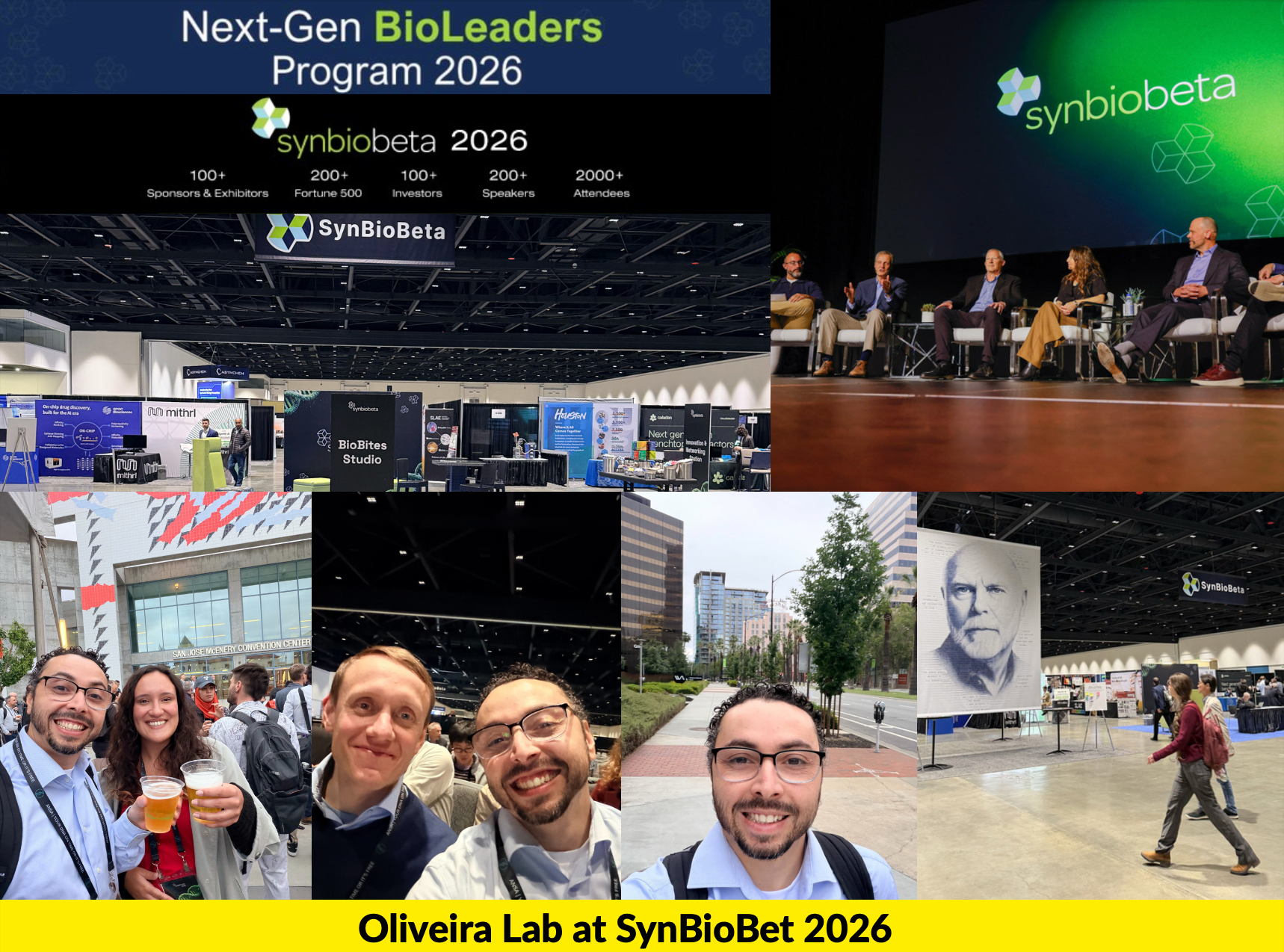
Following his selection to the prestigious SynBioBeta Next-Gen Bioleaders Program, Dr. Sam Oliveira recently attended the SynBioBeta 2026, joining researchers, innovators, entrepreneurs, and industry leaders from across the synthetic biology community. The event provided an exciting opportunity to engage in discussions on emerging technologies, biotechnology innovation, bioengineering, and the future of programmable biological systems. It was also a valuable platform for connecting with...
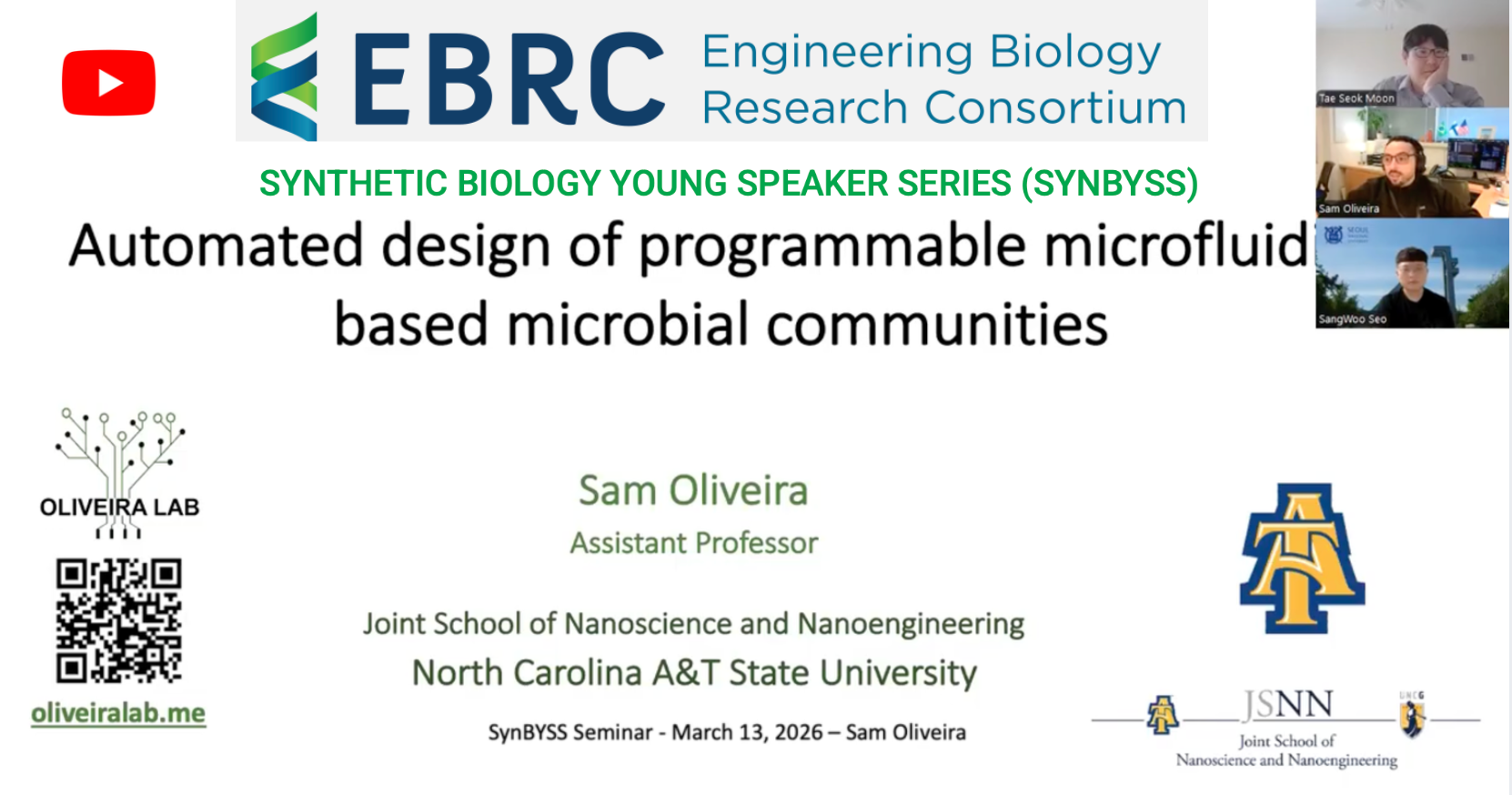
Dr. Oliveira recently delivered a talk as part of the Synthetic Biology Young Speaker Series (SynBYSS) , a global seminar series that highlights emerging leaders and early-career researchers in synthetic biology. SynBYSS is a weekly virtual seminar that brings together the international scientific community to share cutting-edge research and foster collaboration among rising scientists in the field. In this talk, Dr. Oliveira contributed to ongoing discussions in synthetic biology, showcasing...
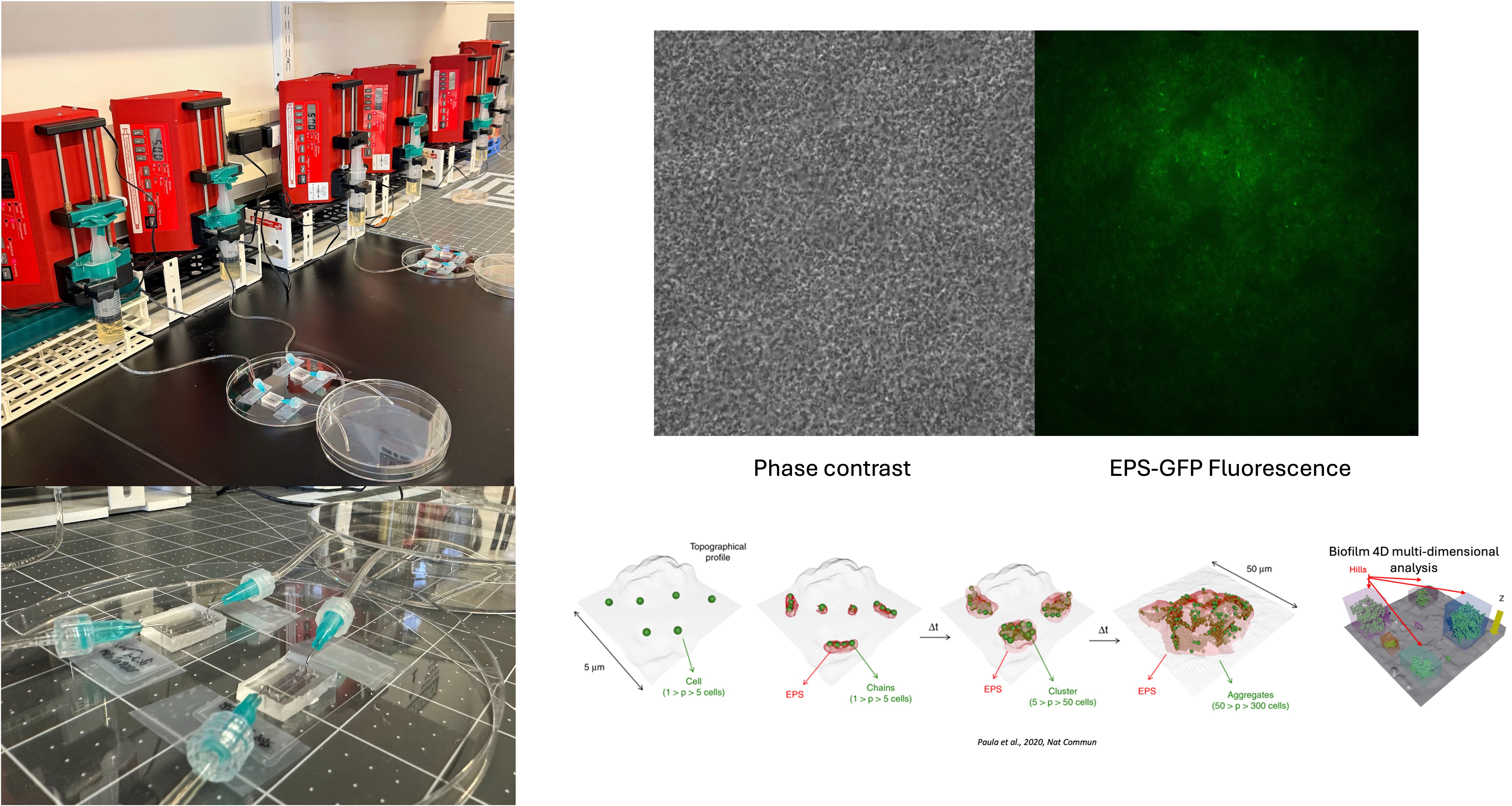
The Oliveira Lab has implemented a high-throughput syringe pump platform that enables multiple microfluidic biofilm experiments to run in parallel under controlled flow conditions. This setup allows simultaneous testing of different microbial species, environmental conditions, and treatment strategies within microfluidic chips. Biofilms are highly structured microbial communities in which cells organize into complex spatial architectures supported by extracellular polymeric substances (EPS)....
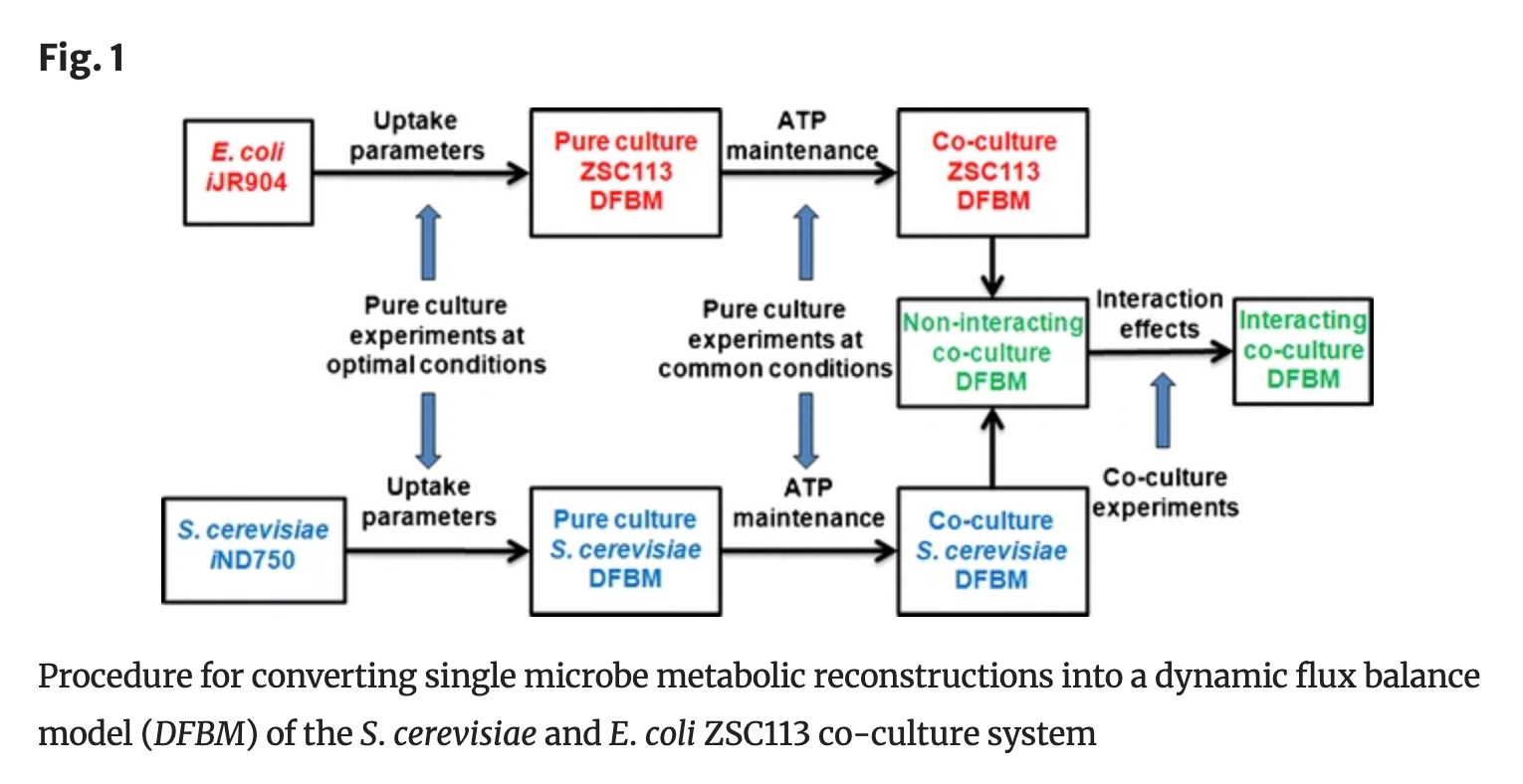
There exists an experimentally motivated co-culture framework validated in situ by Timothy J. Hanly, Morgan Urello, and Michael A. Henson in their study published in Applied Microbiology and Biotechnology on “ Dynamic flux balance modeling of S. cerevisiae and E. coli co-cultures for efficient consumption of glucose/xylose mixtures ,” which integrates dynamic flux balance analysis (dFBA) with bioreactor modeling to describe substrate utilization in S. cerevisiae and E. coli co-cultures....
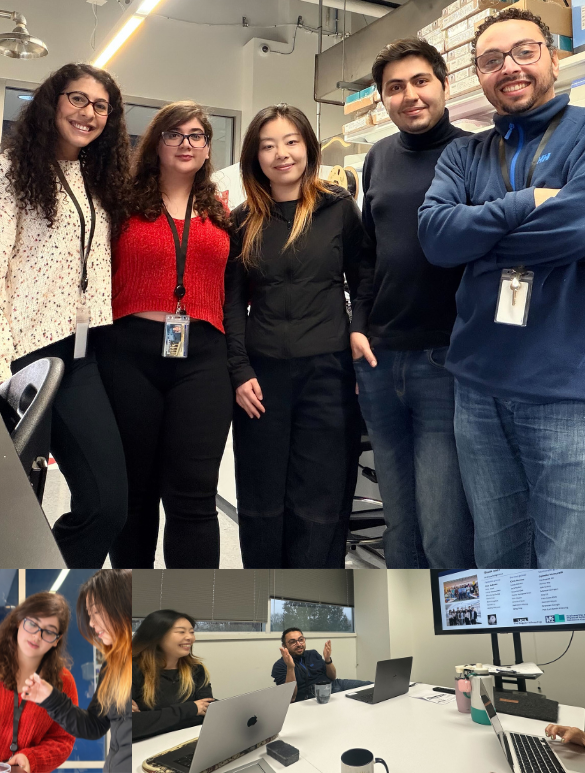
This month, the Oliveira Lab had the pleasure of hosting Casey Chen from Professor Alex Fedorik’s lab as part of an ongoing research collaboration. The visit provided an excellent opportunity to exchange ideas, discuss experimental approaches, and strengthen collaborative efforts between the two groups. During the visit, Casey engaged with lab members on shared research interests, ongoing projects, and future directions, fostering productive scientific dialogue and cross-lab knowledge...
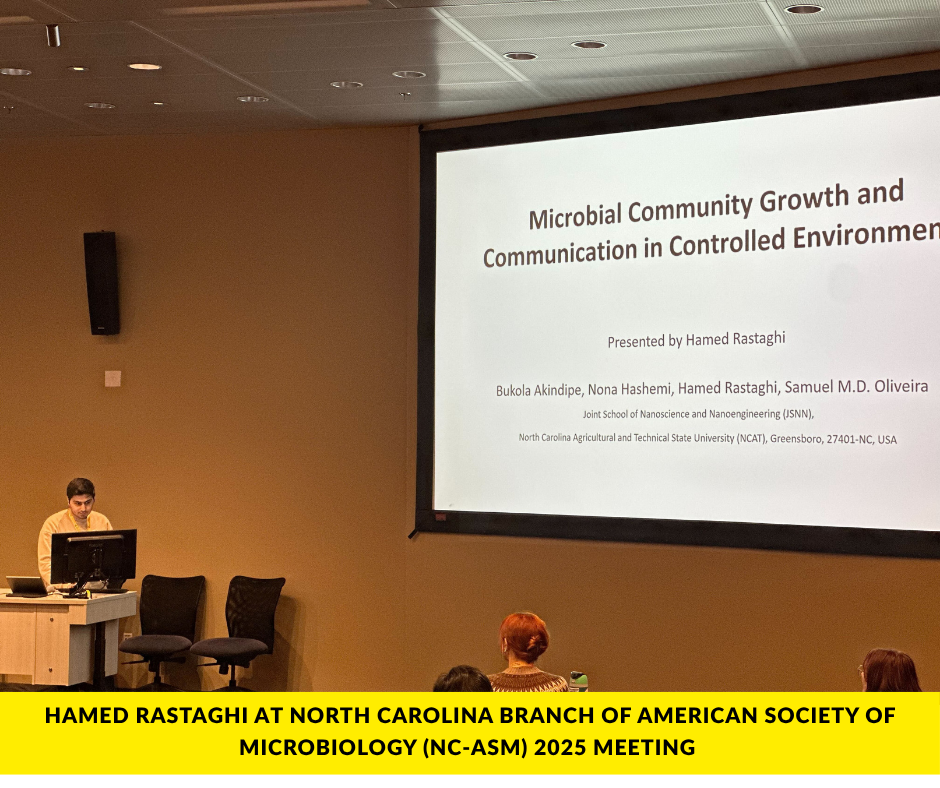
On Saturday, November 2, 2025 , Hamed Rastaghi presented the Oliveira Lab at the 2025 North Carolina Branch Meeting of the American Society for Microbiology (NC-ASM) in Greensboro. His talk, “Microbial Community Growth and Communication in Controlled Environments,” highlighted our lab’s work and acknowledged co-authors Bukola Akindipe and Nona Hashemi . #NCASM2025 #AmericanSocietyforMicrobiology #MicrobialCommunities
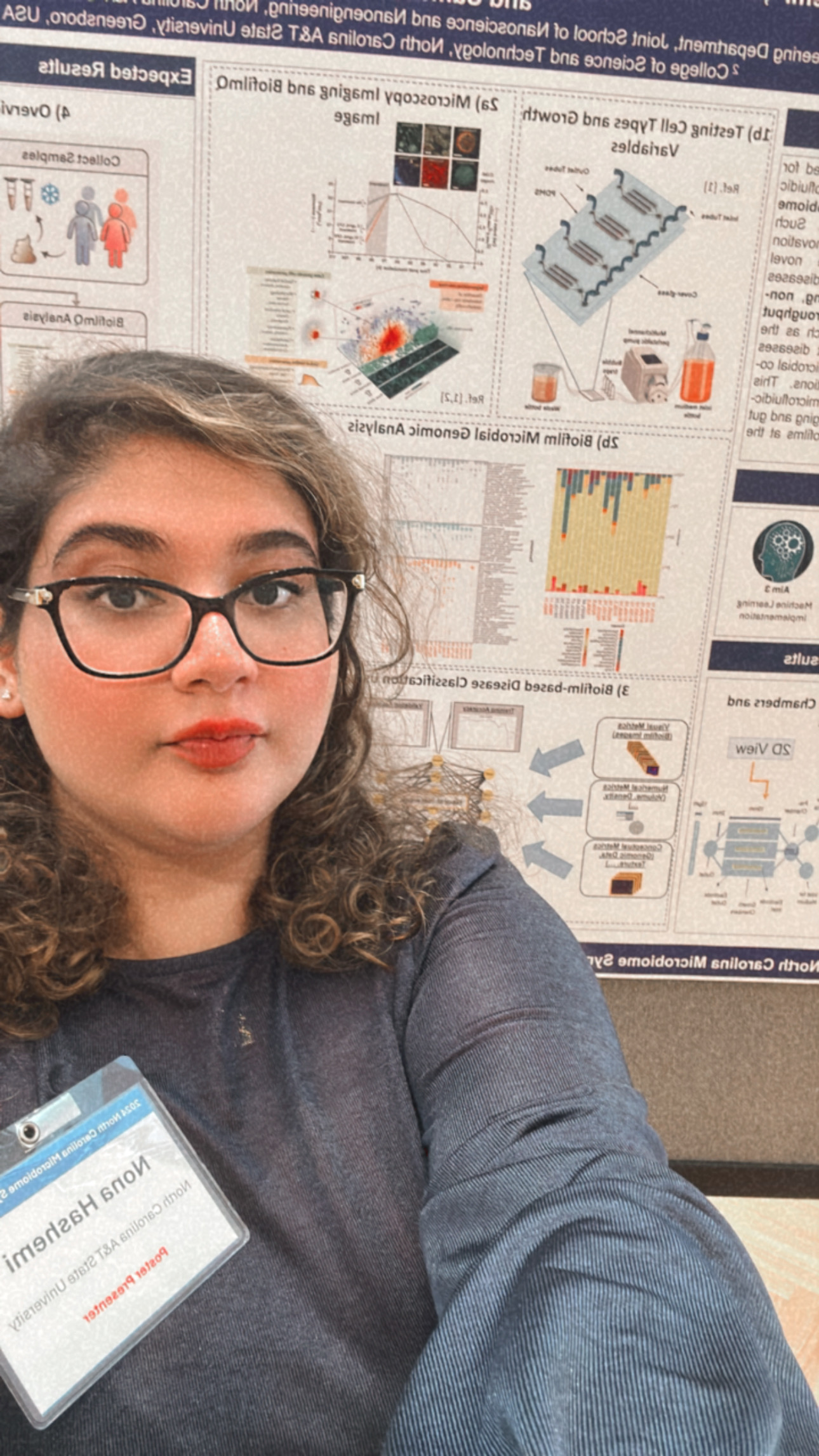
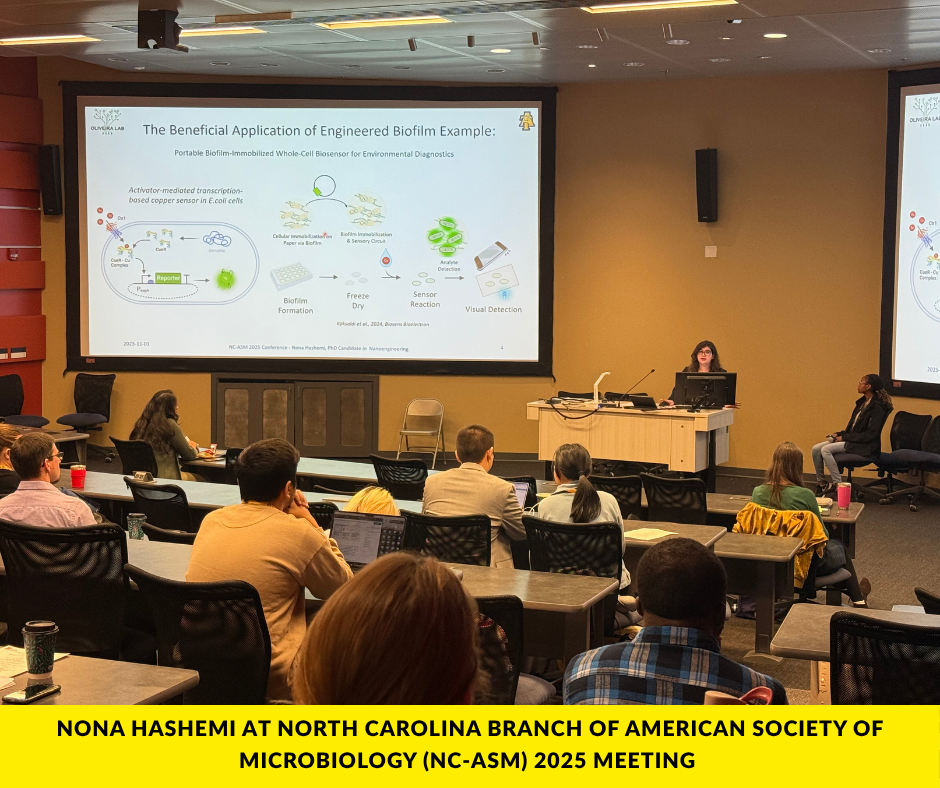
On Saturday, November 2, 2025, Nona Hashemi, a Ph.D. candidate in Nanoengineering at the Joint School of Nanoscience and Nanoengineering (JSNN), presented her latest research at the 2025 North Carolina Branch Meeting of the American Society for Microbiology (NCASM). She shared her work on spatiotemporal bacterial biofilm formation and community dynamics , exploring how microbial communities evolve across space and time. The NCASM 2025 meeting brought together microbiologists and researchers...
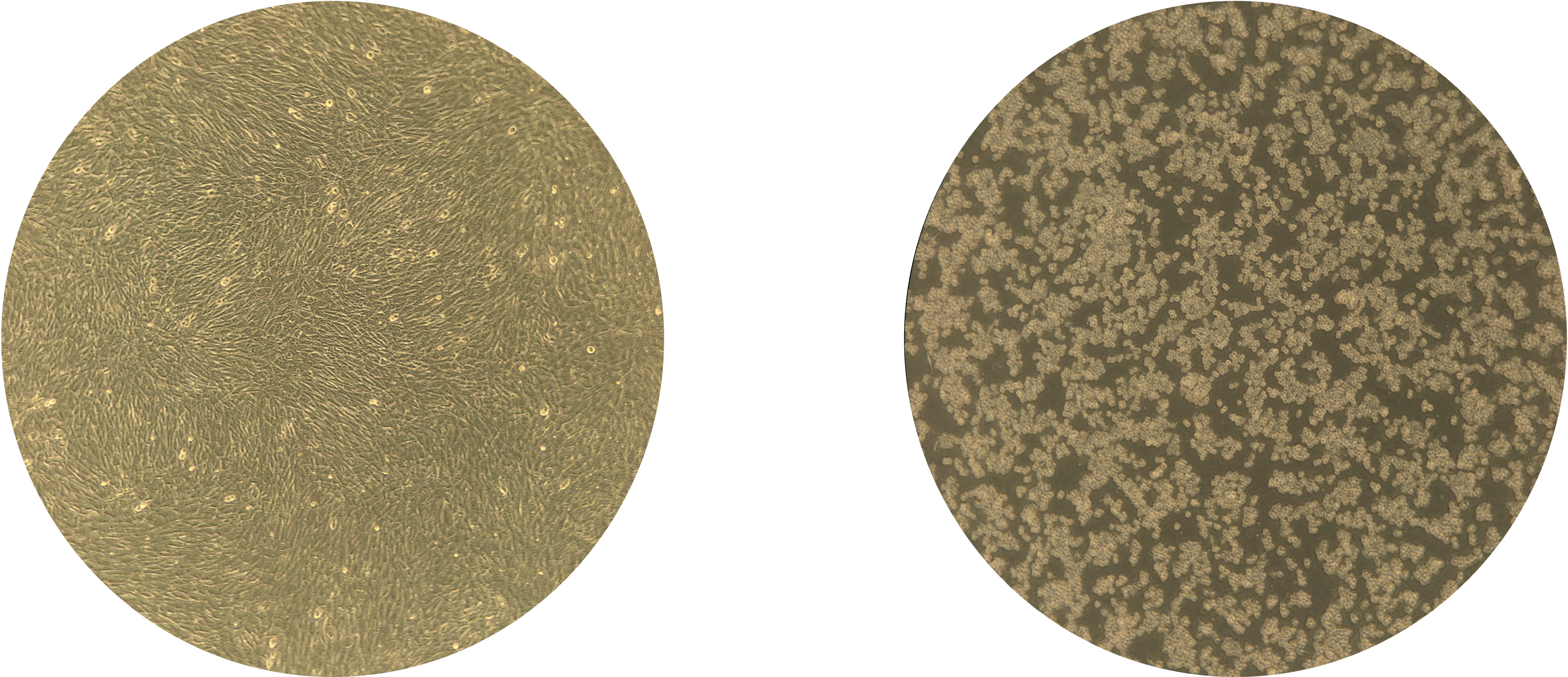
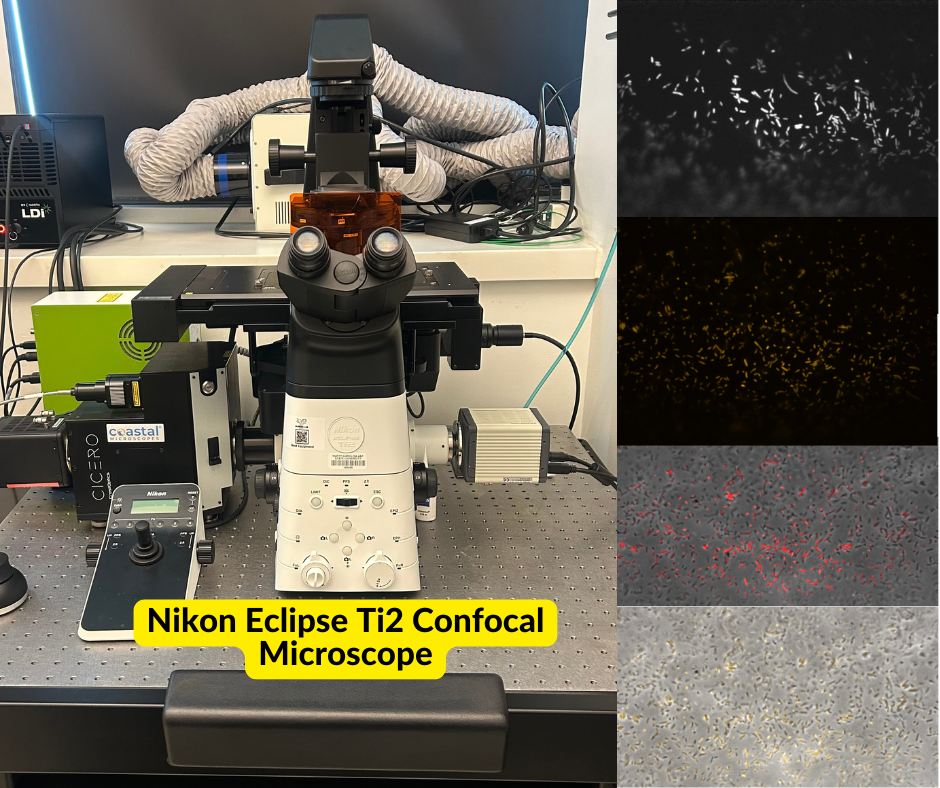
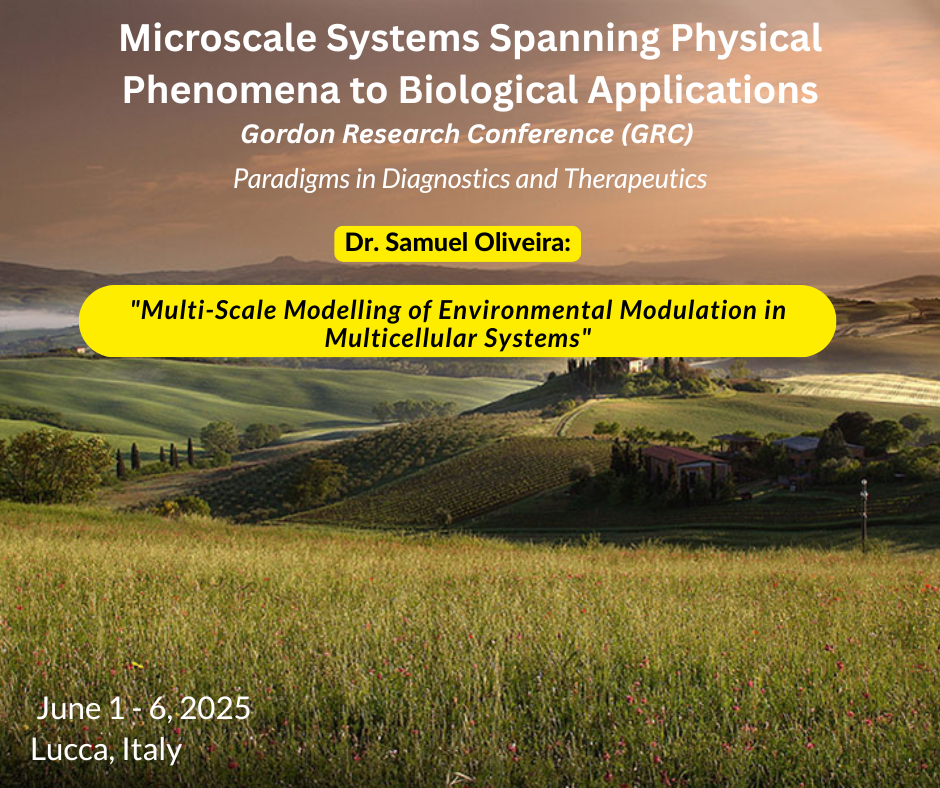
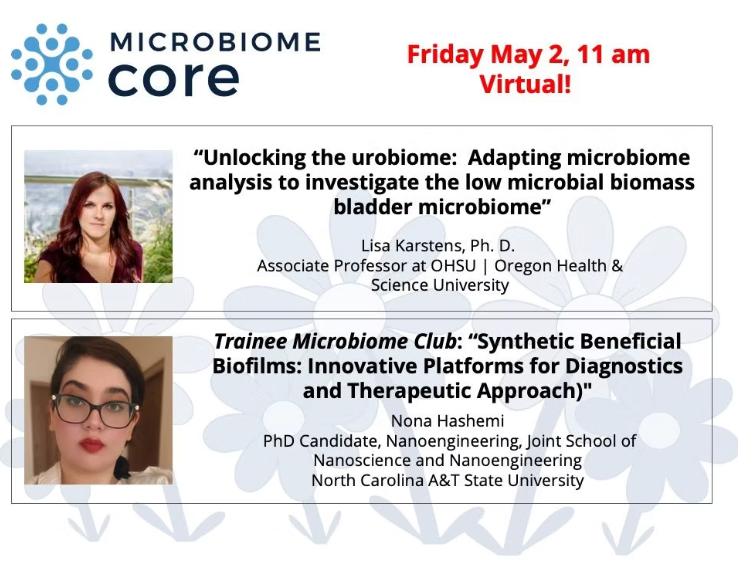
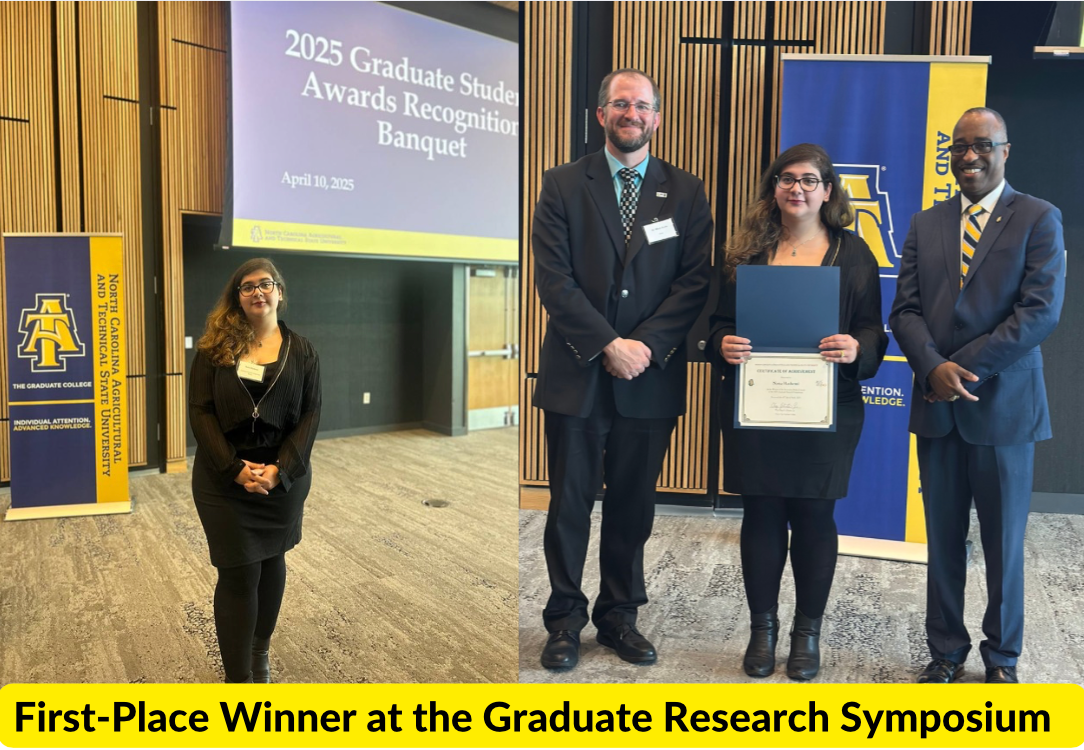
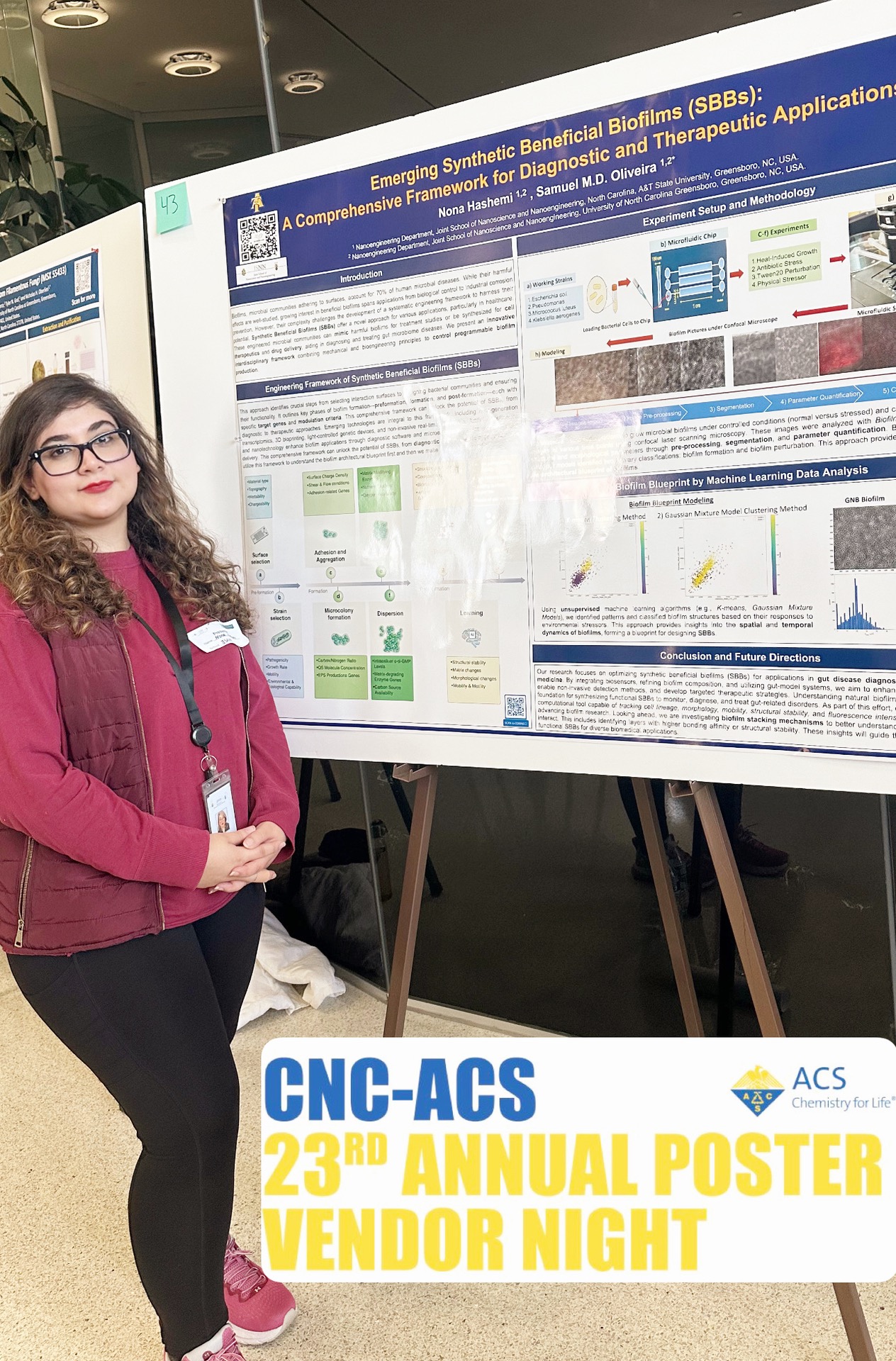
{"schema":1,"posts":{"516":"https:\/\/www.oliveiralab.me\/post\/oliveira-lab-publishes-deepweed-a-framework-for-automated-individual-segmentation-and-lineage-tracking-of-duckweed","456":"https:\/\/www.oliveiralab.me\/post\/oliveira-lab-publishes-partaker-a-tool-for-single-cell-bacterial-analysis-in-microfluidic-time-laps","453":"https:\/\/www.oliveiralab.me\/post\/bringing-automation-to-the-lab-robotic-sampling-in-action","447":"https:\/\/www.oliveiralab.me\/post\/oliveira-lab-presents-constraint-aware-biofilm-design-at-iwbda-2026","446":"https:\/\/www.oliveiralab.me\/post\/oliveira-lab-publishes-review-on-engineered-bacterial-biofilms-in-trends-in-biotechnology","438":"https:\/\/www.oliveiralab.me\/post\/dr-oliveira-attends-synbiobeta-2026","431":"https:\/\/www.oliveiralab.me\/post\/dr-oliveira-speaks-at-the-synthetic-biology-young-speaker-series","428":"https:\/\/www.oliveiralab.me\/post\/engineering-biofilm-structure-with-a-high-throughput-microfluidic-platform","427":"https:\/\/www.oliveiralab.me\/post\/extending-dynamic-flux-balance-modeling-to-feedback-regulated-modular-co-culture-systems","419":"https:\/\/www.oliveiralab.me\/post\/research-visit-from-dr-alex-fedorik-s-lab","410":"https:\/\/www.oliveiralab.me\/post\/nc-asm-2025-hamed-rastaghi-showcases-oliveira-lab-research","409":"https:\/\/www.oliveiralab.me\/post\/nona-hashemi-presents-at-the-2025-north-carolina-asm-meeting","400":"https:\/\/www.oliveiralab.me\/post\/new-milestone-mammalian-cell-culture-at-jsnn","399":"https:\/\/www.oliveiralab.me\/post\/nikon-eclipse-ti2-confocal-microscope-in-oliveira-lab","391":"https:\/\/www.oliveiralab.me\/post\/dr-samuel-oliveira-at-grc-2025-physics-and-chemistry-of-microfluidics","384":"https:\/\/www.oliveiralab.me\/post\/nona-hashemi-presents-at-unc-s-first-friday-microbiome-seminar","380":"https:\/\/www.oliveiralab.me\/post\/nona-hashemi-wins-first-place-at-the-graduate-research-symposium","379":"https:\/\/www.oliveiralab.me\/post\/oliveira-lab-presents-in-central-north-carolina-acs-23rd-poster-vendor-night"}}{"schema":1,"posts":{"516":{"url":"https:\/\/www.oliveiralab.me\/post\/oliveira-lab-publishes-deepweed-a-framework-for-automated-individual-segmentation-and-lineage-tracking-of-duckweed"},"456":{"url":"https:\/\/www.oliveiralab.me\/post\/oliveira-lab-publishes-partaker-a-tool-for-single-cell-bacterial-analysis-in-microfluidic-time-laps"},"453":{"url":"https:\/\/www.oliveiralab.me\/post\/bringing-automation-to-the-lab-robotic-sampling-in-action"},"447":{"url":"https:\/\/www.oliveiralab.me\/post\/oliveira-lab-presents-constraint-aware-biofilm-design-at-iwbda-2026"},"446":{"url":"https:\/\/www.oliveiralab.me\/post\/oliveira-lab-publishes-review-on-engineered-bacterial-biofilms-in-trends-in-biotechnology"},"438":{"url":"https:\/\/www.oliveiralab.me\/post\/dr-oliveira-attends-synbiobeta-2026"},"431":{"url":"https:\/\/www.oliveiralab.me\/post\/dr-oliveira-speaks-at-the-synthetic-biology-young-speaker-series"},"428":{"url":"https:\/\/www.oliveiralab.me\/post\/engineering-biofilm-structure-with-a-high-throughput-microfluidic-platform"},"427":{"url":"https:\/\/www.oliveiralab.me\/post\/extending-dynamic-flux-balance-modeling-to-feedback-regulated-modular-co-culture-systems"},"419":{"url":"https:\/\/www.oliveiralab.me\/post\/research-visit-from-dr-alex-fedorik-s-lab"},"410":{"url":"https:\/\/www.oliveiralab.me\/post\/nc-asm-2025-hamed-rastaghi-showcases-oliveira-lab-research"},"409":{"url":"https:\/\/www.oliveiralab.me\/post\/nona-hashemi-presents-at-the-2025-north-carolina-asm-meeting"},"400":{"url":"https:\/\/www.oliveiralab.me\/post\/new-milestone-mammalian-cell-culture-at-jsnn"},"399":{"url":"https:\/\/www.oliveiralab.me\/post\/nikon-eclipse-ti2-confocal-microscope-in-oliveira-lab"},"391":{"url":"https:\/\/www.oliveiralab.me\/post\/dr-samuel-oliveira-at-grc-2025-physics-and-chemistry-of-microfluidics"},"384":{"url":"https:\/\/www.oliveiralab.me\/post\/nona-hashemi-presents-at-unc-s-first-friday-microbiome-seminar"},"380":{"url":"https:\/\/www.oliveiralab.me\/post\/nona-hashemi-wins-first-place-at-the-graduate-research-symposium"},"379":{"url":"https:\/\/www.oliveiralab.me\/post\/oliveira-lab-presents-in-central-north-carolina-acs-23rd-poster-vendor-night"}}}{"schema":1,"posts":{"516":{"id":516,"url":"https:\/\/www.oliveiralab.me\/post\/oliveira-lab-publishes-deepweed-a-framework-for-automated-individual-segmentation-and-lineage-tracking-of-duckweed","title":"Oliveira Lab Publishes Deepweed: A Framework for Automated Individual Segmentation and Lineage Tracking of Duckweed","text":"Fresh from the Oliveira Lab: Oliveira Lab Publishes Deepweed: A Framework for Automated Individual Segmentation and Lineage Tracking of Duckweed\n\nWe\u2019re excited to share that our paper, \u201cDeepweed: Automated Individual Segmentation and Tracking for Duckweed Lineage Analysis,\u201d is now published in Bioinformatics! Duckweeds like Wolffia australiana are the smallest and fastest-growing flowering plants on Earth, with growing potential in biotechnology. They multiply through rapid clonal budding, yet most existing image analysis tools only measure growth at the population level, missing individual plants and the family trees connecting them. Deepweed is a framework that fills that gap. Using deep-learning-based instance segmentation and multi-object tracking, it follows individual fronds across time-lapse images, assigns each one a persistent identity, and reconstructs mother-daughter relationships. The pipeline outputs lineage graphs, individual morphological metrics, and population growth summaries, along with lineage-annotated time-lapse videos. Applied to dense Wolffia populations, both free-growing and in microfluidic devices, Dee\u2026\n\nRead the full post: https:\/\/www.oliveiralab.me\/post\/oliveira-lab-publishes-deepweed-a-framework-for-automated-individual-segmentation-and-lineage-tracking-of-duckweed\n\n#Duckweed #Microfluidics #Biotechnology #LineageTracking #ImageSegmentation"},"456":{"id":456,"url":"https:\/\/www.oliveiralab.me\/post\/oliveira-lab-publishes-partaker-a-tool-for-single-cell-bacterial-analysis-in-microfluidic-time-laps","title":"Oliveira Lab Publishes Partaker: A Tool for Single-Cell Bacterial Analysis in Microfluidic Time-Lapse Imaging","text":"Fresh from the Oliveira Lab: Oliveira Lab Publishes Partaker: A Tool for Single-Cell Bacterial Analysis in Microfluidic Time-Lapse Imaging\n\nWe\u0027re excited to share that our paper, \u0022Partaker: deep-learning-based single-cell-resolution analysis of multi-dimensional, long-term, microfluidic-based time-lapse microscopy data,\u0022 is officially published in Bioinformatics! This one has been a long time in the making, and we couldn\u0027t be more excited to finally share it. Partaker brings deep-learning segmentation, multi-channel fluorescence quantification, and scalable analysis together into one unified pipeline, solving a problem that\u0027s frustrated microfluidic imaging researchers for years: tools that don\u0027t generalize or scale across datasets. Huge congratulations to lead author Henrique Libutti-Nunez\u00a0and to co-authors Bukola Akindipe, Hamed Rastaghi, Nona Hashemi, and Samuel Oliveira\u00a0for the incredible work behind this publication.\n\nRead the full post: https:\/\/www.oliveiralab.me\/post\/oliveira-lab-publishes-partaker-a-tool-for-single-cell-bacterial-analysis-in-microfluidic-time-laps\n\n#Microfluidics #ImageSegmentation"},"453":{"id":453,"url":"https:\/\/www.oliveiralab.me\/post\/bringing-automation-to-the-lab-robotic-sampling-in-action","title":"Bringing Automation to the Lab: Robotic Sampling in Action","text":"Fresh from the Oliveira Lab: Bringing Automation to the Lab: Robotic Sampling in Action\n\nThe Oliveira Lab is exploring robotic automation as part of our effort to build more autonomous experimental workflows. Our latest setup uses a robotic arm to perform repeatable sampling tasks, creating a foundation for integrating automated sample collection with microbial experiments. By coordinating the robotic arm with experimental hardware and software, we are working toward systems that can collect samples at defined locations and time points with less manual intervention. This could make long-duration experiments easier to standardize while creating new opportunities to connect physical laboratory actions with real-time measurements and computational decision-making. This work supports the lab\u2019s broader goal of combining robotics, automation, microfluidics, and computational tools to develop smarter experimental platforms for studying and engineering microbial systems.\n\nRead the full post: https:\/\/www.oliveiralab.me\/post\/bringing-automation-to-the-lab-robotic-sampling-in-action\n\n#Microfluidics #Automation"},"447":{"id":447,"url":"https:\/\/www.oliveiralab.me\/post\/oliveira-lab-presents-constraint-aware-biofilm-design-at-iwbda-2026","title":"Oliveira Lab Presents Constraint-Aware Biofilm Design at IWBDA 2026","text":"Fresh from the Oliveira Lab: Oliveira Lab Presents Constraint-Aware Biofilm Design at IWBDA 2026\n\nNona Hashemi presented work integrating microfluidic physics with agent-based biofilm simulation at the International Workshop on Biodesign Automation. Oliveira Lab Ph.D. candidate Nona Hashemi presented \u201cConstraint-Aware Biofilm Design: Integrating Microfluidic Physics into Agent-Based Modeling for Synthetic Biology\u201d at the International Workshop on Biodesign Automation 2026 (IWBDA 2026) in Boulder, Colorado. Her talk focused on a biofilm-on-chip modeling framework that connects COMSOL-based microfluidic simulations with agent-based biofilm modeling to better understand how physical transport conditions shape biofilm growth and accumulation. The work addresses an important gap in biofilm modeling: biological simulations can capture cell behavior and spatial biofilm development, but they often do not fully account for the microfluidic environment that cells experience on-chip. By incorporating hydrodynamic constraints, nutrient transport, and boundary-layer effects into the modeling wo\u2026\n\nRead the full post: https:\/\/www.oliveiralab.me\/post\/oliveira-lab-presents-constraint-aware-biofilm-design-at-iwbda-2026\n\n#Microfluidics #Biofilms #SyntheticBiology #Automation"},"446":{"id":446,"url":"https:\/\/www.oliveiralab.me\/post\/oliveira-lab-publishes-review-on-engineered-bacterial-biofilms-in-trends-in-biotechnology","title":"Oliveira Lab Publishes Review on Engineered Bacterial Biofilms in Trends in Biotechnology","text":"Fresh from the Oliveira Lab: Oliveira Lab Publishes Review on Engineered Bacterial Biofilms in Trends in Biotechnology\n\nWe are pleased to share that our review article, \u201cEngineered bacterial biofilms for biotechnological applications,\u201d is now available online in Trends in Biotechnology. This review highlights how engineered bacterial biofilms can be developed as programmable living platforms for biotechnology. The article discusses how biofilm-associated traits, including adhesion, extracellular matrix formation, spatial organization, and stress tolerance, can be repurposed for applications in bioproduction, biosensing, bioremediation, agriculture, therapeutic delivery, and engineered living materials. The paper also introduces a life cycle-based engineering framework for engineered bacterial biofilms, organized into three major phases: preformation, formation, and postformation. This framework connects chassis selection, genetic programming, material interfaces, biofilm maturation, functional testing, optimization, and deployment.\n\nRead the full post: https:\/\/www.oliveiralab.me\/post\/oliveira-lab-publishes-review-on-engineered-bacterial-biofilms-in-trends-in-biotechnology\n\n#Biofilms #Biotechnology"},"438":{"id":438,"url":"https:\/\/www.oliveiralab.me\/post\/dr-oliveira-attends-synbiobeta-2026","title":"Dr. Oliveira at SynBioBeta 2026","text":"Fresh from the Oliveira Lab: Dr. Oliveira at SynBioBeta 2026\n\nFollowing his selection to the prestigious SynBioBeta Next-Gen Bioleaders Program, Dr. Sam Oliveira recently attended the SynBioBeta 2026, joining researchers, innovators, entrepreneurs, and industry leaders from across the synthetic biology community. The event provided an exciting opportunity to engage in discussions on emerging technologies, biotechnology innovation, bioengineering, and the future of programmable biological systems. It was also a valuable platform for connecting with collaborators working across academia, startups, and industry. Participation in SynBioBeta reflects the Oliveira Lab\u2019s growing involvement in the broader synthetic biology ecosystem and its commitment to translating interdisciplinary research into real-world impact. We are excited to bring back new ideas, collaborations, and inspiration from the conference and look forward to integrating these perspectives into our ongoing research efforts.\n\nRead the full post: https:\/\/www.oliveiralab.me\/post\/dr-oliveira-attends-synbiobeta-2026\n\n#SyntheticBiology #Bioengineering #Biotechnology"},"431":{"id":431,"url":"https:\/\/www.oliveiralab.me\/post\/dr-oliveira-speaks-at-the-synthetic-biology-young-speaker-series","title":"Dr. Oliveira Speaks at the Synthetic Biology Young Speaker Series","text":"Fresh from the Oliveira Lab: Dr. Oliveira Speaks at the Synthetic Biology Young Speaker Series\n\nDr. Oliveira recently delivered a talk as part of the Synthetic Biology Young Speaker Series (SynBYSS), a global seminar series that highlights emerging leaders and early-career researchers in synthetic biology. SynBYSS is a weekly virtual seminar that brings together the international scientific community to share cutting-edge research and foster collaboration among rising scientists in the field. In this talk, Dr. Oliveira contributed to ongoing discussions in synthetic biology, showcasing his lab\u0027s research. The presentation is part of a broader effort by SynBYSS to amplify new voices and advance the future of engineering biology. You can watch the full talk here:https:\/\/youtu.be\/_fa0cqqsuxk?si=G1vcrcGmvgDjQQ-n\n\nRead the full post: https:\/\/www.oliveiralab.me\/post\/dr-oliveira-speaks-at-the-synthetic-biology-young-speaker-series\n\n#SyntheticBiology"},"428":{"id":428,"url":"https:\/\/www.oliveiralab.me\/post\/engineering-biofilm-structure-with-a-high-throughput-microfluidic-platform","title":"Engineering Biofilm Structure with a High-Throughput Microfluidic Platform","text":"Fresh from the Oliveira Lab: Engineering Biofilm Structure with a High-Throughput Microfluidic Platform\n\nThe Oliveira Lab has implemented a high-throughput syringe pump platform\u00a0that enables multiple microfluidic biofilm experiments to run in parallel under controlled flow conditions. This setup allows simultaneous testing of different microbial species, environmental conditions, and treatment strategies within microfluidic chips. Biofilms are highly structured microbial communities in which cells organize into complex spatial architectures supported by extracellular polymeric substances (EPS). Previous studies have shown that biofilm structure is heterogeneous and evolves over time, with spatial organization influenced by microbial composition, metabolic activity, and environmental conditions (Paula et al., 2020).\n\nRead the full post: https:\/\/www.oliveiralab.me\/post\/engineering-biofilm-structure-with-a-high-throughput-microfluidic-platform\n\n#Microfluidics #Biofilms"},"427":{"id":427,"url":"https:\/\/www.oliveiralab.me\/post\/extending-dynamic-flux-balance-modeling-to-feedback-regulated-modular-co-culture-systems","title":"Extending Dynamic Flux Balance Modeling to Feedback-Regulated Modular Co-Culture Systems","text":"Fresh from the Oliveira Lab: Extending Dynamic Flux Balance Modeling to Feedback-Regulated Modular Co-Culture Systems\n\nThere exists an experimentally motivated co-culture framework validated in situ by Timothy J. Hanly, Morgan Urello, and Michael A. Henson\u00a0in their study published in Applied Microbiology and Biotechnology\u00a0on \u201cDynamic flux balance modeling of S. cerevisiae\u00a0and E. coli co-cultures for efficient consumption of glucose\/xylose mixtures,\u201d which integrates dynamic flux balance analysis (dFBA) with bioreactor modeling to describe substrate utilization in S. cerevisiae\u00a0and E. coli co-cultures. In replicating this work, we reconstructed the dFBA framework to simulate glucose and xylose consumption dynamics and ethanol production under varying environmental and kinetic constraints. Our reproduced simulations successfully captured the characteristic diauxic behavior observed in the original study, with yeast preferentially consuming glucose before shifts in metabolic activity altered overall substrate partitioning. Through systematic parameter exploration, we examined the sensitivity of ethanol ac\u2026\n\nRead the full post: https:\/\/www.oliveiralab.me\/post\/extending-dynamic-flux-balance-modeling-to-feedback-regulated-modular-co-culture-systems\n\n#Biotechnology"},"419":{"id":419,"url":"https:\/\/www.oliveiralab.me\/post\/research-visit-from-dr-alex-fedorik-s-lab","title":"Research Visit from Dr. Alex Fedorik\u2019s Lab","text":"Fresh from the Oliveira Lab: Research Visit from Dr. Alex Fedorik\u2019s Lab\n\nThis month, the Oliveira Lab had the pleasure of hosting Casey Chen from Professor Alex Fedorik\u2019s lab as part of an ongoing research collaboration. The visit provided an excellent opportunity to exchange ideas, discuss experimental approaches, and strengthen collaborative efforts between the two groups. During the visit, Casey engaged with lab members on shared research interests, ongoing projects, and future directions, fostering productive scientific dialogue and cross-lab knowledge exchange. Such interactions are essential for advancing interdisciplinary research and building strong collaborative networks. The Oliveira Lab looks forward to continued collaboration with Alex Fedorik\u2019s lab and future joint efforts that build on this visit.\n\nRead the full post: https:\/\/www.oliveiralab.me\/post\/research-visit-from-dr-alex-fedorik-s-lab"},"410":{"id":410,"url":"https:\/\/www.oliveiralab.me\/post\/nc-asm-2025-hamed-rastaghi-showcases-oliveira-lab-research","title":"NC-ASM 2025: Hamed Rastaghi Showcases Oliveira Lab Research","text":"Fresh from the Oliveira Lab: NC-ASM 2025: Hamed Rastaghi Showcases Oliveira Lab Research\n\nOn Saturday, November 2, 2025, Hamed Rastaghi presented the Oliveira Lab at the 2025 North Carolina Branch Meeting of the American Society for Microbiology (NC-ASM) in Greensboro. His talk, \u201cMicrobial Community Growth and Communication in Controlled Environments,\u201d highlighted our lab\u2019s work and acknowledged co-authors Bukola Akindipe and Nona Hashemi. #NCASM2025 #AmericanSocietyforMicrobiology #MicrobialCommunities\n\nRead the full post: https:\/\/www.oliveiralab.me\/post\/nc-asm-2025-hamed-rastaghi-showcases-oliveira-lab-research"},"409":{"id":409,"url":"https:\/\/www.oliveiralab.me\/post\/nona-hashemi-presents-at-the-2025-north-carolina-asm-meeting","title":"Nona Hashemi Presents at the 2025 North Carolina ASM Meeting","text":"Fresh from the Oliveira Lab: Nona Hashemi Presents at the 2025 North Carolina ASM Meeting\n\nOn Saturday, November 2, 2025, Nona Hashemi, a Ph.D. candidate in Nanoengineering at the Joint School of Nanoscience and Nanoengineering (JSNN), presented her latest research at the 2025 North Carolina Branch Meeting of the American Society for Microbiology (NCASM). She shared her work on spatiotemporal bacterial biofilm formation and community dynamics, exploring how microbial communities evolve across space and time. The NCASM 2025 meeting brought together microbiologists and researchers from across the region to share new findings and discuss emerging challenges in microbial science.\n\nRead the full post: https:\/\/www.oliveiralab.me\/post\/nona-hashemi-presents-at-the-2025-north-carolina-asm-meeting\n\n#Biofilms #Nanoscience"},"400":{"id":400,"url":"https:\/\/www.oliveiralab.me\/post\/new-milestone-mammalian-cell-culture-at-jsnn","title":"New Milestone: Mammalian Cell Culture at Oliveira Lab!","text":"Fresh from the Oliveira Lab: New Milestone: Mammalian Cell Culture at Oliveira Lab!\n\nThe Oliveira Lab has officially started cultivating mammalian cells! This is an exciting step that expands our research capabilities in microfluidics, bioengineering, and advanced cellular models. This is part of an ongoing collaborative project\u00a0with Dr. Robert Newman\u00a0and Dr. Stephanie Goodrich, which has been supported by the NCAT Provost\u2019s office since 2024. We hope this project will lead to multiple exciting initiatives in the upcoming months. We look forward to leveraging these cultures in ongoing and future projects!\n\nRead the full post: https:\/\/www.oliveiralab.me\/post\/new-milestone-mammalian-cell-culture-at-jsnn\n\n#Microfluidics #Bioengineering"},"399":{"id":399,"url":"https:\/\/www.oliveiralab.me\/post\/nikon-eclipse-ti2-confocal-microscope-in-oliveira-lab","title":"Newly Upgraded Imaging System: Nikon Eclipse Ti2 Confocal Microscope","text":"Fresh from the Oliveira Lab: Newly Upgraded Imaging System: Nikon Eclipse Ti2 Confocal Microscope\n\nThe Oliveira Lab has recently upgraded its imaging capabilities with the Nikon Eclipse Ti2 Confocal Microscope, a motorized and intelligent system designed for advanced imaging applications. This model is compatible with the Perfect Focus System (PFS), auto correction collar, and external phase contrast system, making it an excellent choice for live-cell imaging, high-content applications, and confocal studies. The upgrade was carried out by Timothy Feinstein from Coastal Microscope, with whom we have worked for over five years, and was made possible through funding support from a DARPA grant. With this enhancement, our lab is now equipped to perform 3D biofilm stacking and advanced confocal imaging, significantly expanding our research capabilities.\n\nRead the full post: https:\/\/www.oliveiralab.me\/post\/nikon-eclipse-ti2-confocal-microscope-in-oliveira-lab\n\n#Biofilms"},"391":{"id":391,"url":"https:\/\/www.oliveiralab.me\/post\/dr-samuel-oliveira-at-grc-2025-physics-and-chemistry-of-microfluidics","title":"Dr. Samuel Oliveira at GRC 2025 | Physics and Chemistry of Microfluidics","text":"Fresh from the Oliveira Lab: Dr. Samuel Oliveira at GRC 2025 | Physics and Chemistry of Microfluidics\n\n\ud83c\udf0d From June 1\u20136, the 2025 Gordon Research Conference on the Physics and Chemistry of Microfluidics took place in the beautiful hills of Lucca (Barga), Italy. As part of the session on Paradigms in Diagnostics and Therapeutics,Dr. Samuel Oliveira presented:\ud83e\udde0 \u201cMulti-Scale Modeling of Environmental Modulation in Multicellular Systems\u201d. The conference brought together leading minds in microscale systems research\u2014spanning physical phenomena to biological applications\u2014and it was an honor to see Dr. Oliveira contribute to these forward-thinking conversations. Dr. Oliveira Running at Conference Break #GRC2025 #Microfluidics #MultiscaleModeling #SyntheticBiology #OliveiraLab\n\nRead the full post: https:\/\/www.oliveiralab.me\/post\/dr-samuel-oliveira-at-grc-2025-physics-and-chemistry-of-microfluidics\n\n#Microfluidics"},"384":{"id":384,"url":"https:\/\/www.oliveiralab.me\/post\/nona-hashemi-presents-at-unc-s-first-friday-microbiome-seminar","title":"Nona Hashemi Presents at UNC\u0027s First Friday Microbiome Seminar","text":"Fresh from the Oliveira Lab: Nona Hashemi Presents at UNC\u0027s First Friday Microbiome Seminar\n\nNona Hashemi Presents at UNC\u2019s First Friday Microbiome Seminar We are proud to share that Nona Hashemi, Ph.D. candidate in Nanoengineering from the Oliveira Lab at North Carolina A\u0026T State University, was invited to speak at the First Friday Microbiome (FFM) Seminar hosted by the UNC Microbiome Core on May 2nd. Nona was thrilled to present alongside Dr. Lisa Karstens, Associate Professor at Oregon Health \u0026 Science University, in a seminar that spotlighted innovative research in the microbiome field.\n\nRead the full post: https:\/\/www.oliveiralab.me\/post\/nona-hashemi-presents-at-unc-s-first-friday-microbiome-seminar\n\n#Biofilms #SyntheticBiology"},"380":{"id":380,"url":"https:\/\/www.oliveiralab.me\/post\/nona-hashemi-wins-first-place-at-the-graduate-research-symposium","title":"Nona Hashemi Wins First-Place at the Graduate Research Symposium","text":"Fresh from the Oliveira Lab: Nona Hashemi Wins First-Place at the Graduate Research Symposium\n\nNona Hashemi, a PhD candidate in Nanoengineering from the Oliveira Lab at the Joint School of Nanoscience and Nanoengineering (JSNN), won first place in the Innovative Method category at this year\u2019s Graduate Research Symposium. Her research, titled \u201cEngineering Synthetic Beneficial Biofilm: A Comprehensive Framework for Diagnostic and Therapeutic Applications,\u201d stood out among projects from more than 100 graduate students. Nona expressed her delight in receiving the award from Dean Gloster, Jr., Vice Provost for Graduate Research and Dean of the Graduate College at N.C. A\u0026T, and Dean Croatt, Interim Dean of JSNN. Her achievement highlights both her dedication and the innovative impact of her work.\n\nRead the full post: https:\/\/www.oliveiralab.me\/post\/nona-hashemi-wins-first-place-at-the-graduate-research-symposium\n\n#Biofilms #Nanoscience"},"379":{"id":379,"url":"https:\/\/www.oliveiralab.me\/post\/oliveira-lab-presents-in-central-north-carolina-acs-23rd-poster-vendor-night","title":"Oliveira Lab Presents in Central North Carolina ACS 23rd Poster Vendor Night","text":"Fresh from the Oliveira Lab: Oliveira Lab Presents in Central North Carolina ACS 23rd Poster Vendor Night\n\nFor the second time, we presented in 23rd annual poster vendor night at joint school of nanoscience and nanoengineering (JSNN). We had a lot of great ideas and conversations with academic and industrial researchers. Nona Hashemi, PhD Candidate in Nanoengineering\n\nRead the full post: https:\/\/www.oliveiralab.me\/post\/oliveira-lab-presents-in-central-north-carolina-acs-23rd-poster-vendor-night\n\n#Nanoscience"}},"article":null}