
Hackathon Challenge Spotlight: Tracking Biofilm Dispersion

How can we track bacteria as they break away from their communities?
Bacteria often form protective communities called biofilms. However, these bacteria don’t always stay together. Through a process called biofilm dispersion, bacteria can break away and spread to new locations.
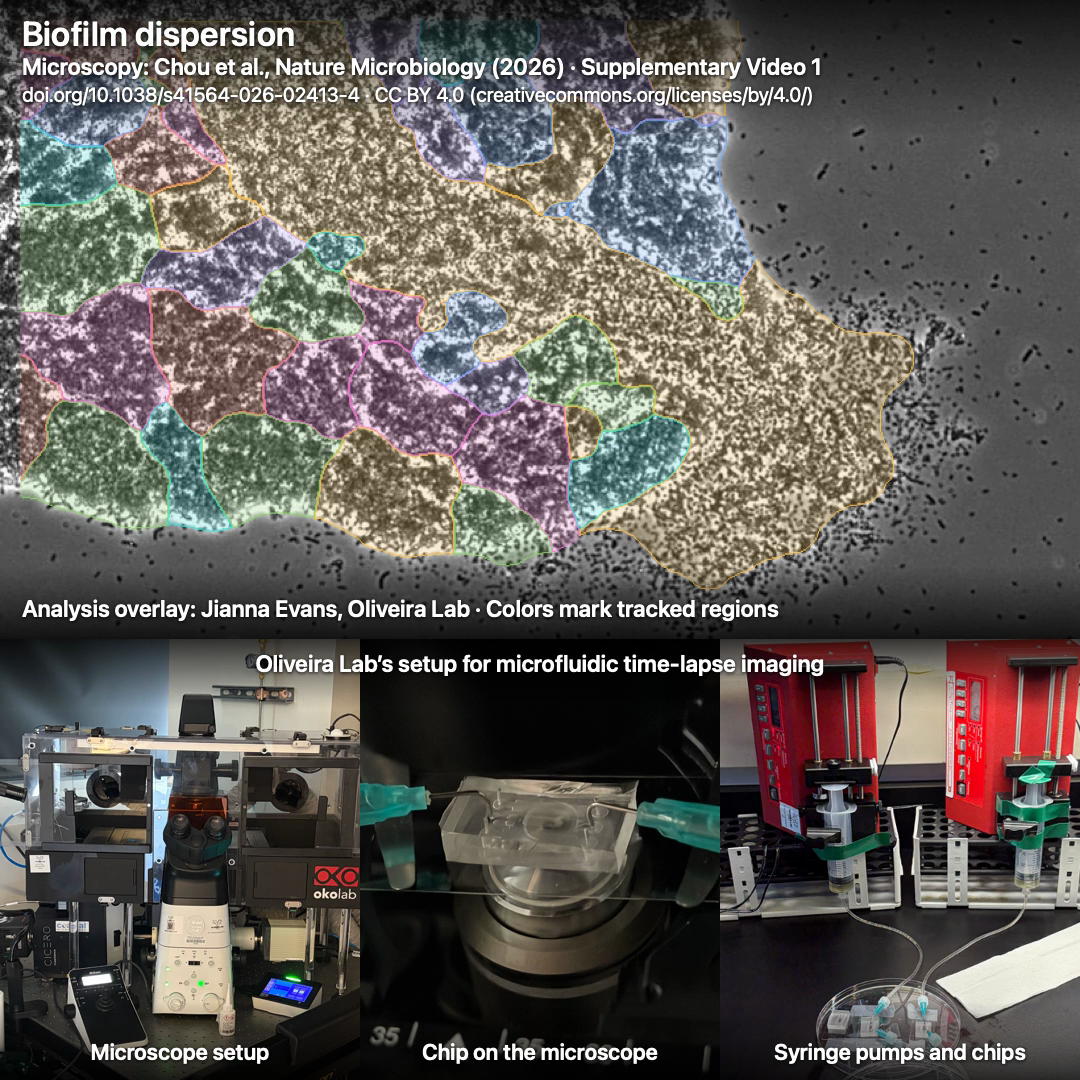
A recent Nature Microbiology study by Chou et al. (2026), including Professor Gürol Süel, demonstrated how Bacillus subtilis biofilms can eject bacterial cells using mechanical forces generated by a self-produced hydrogel.
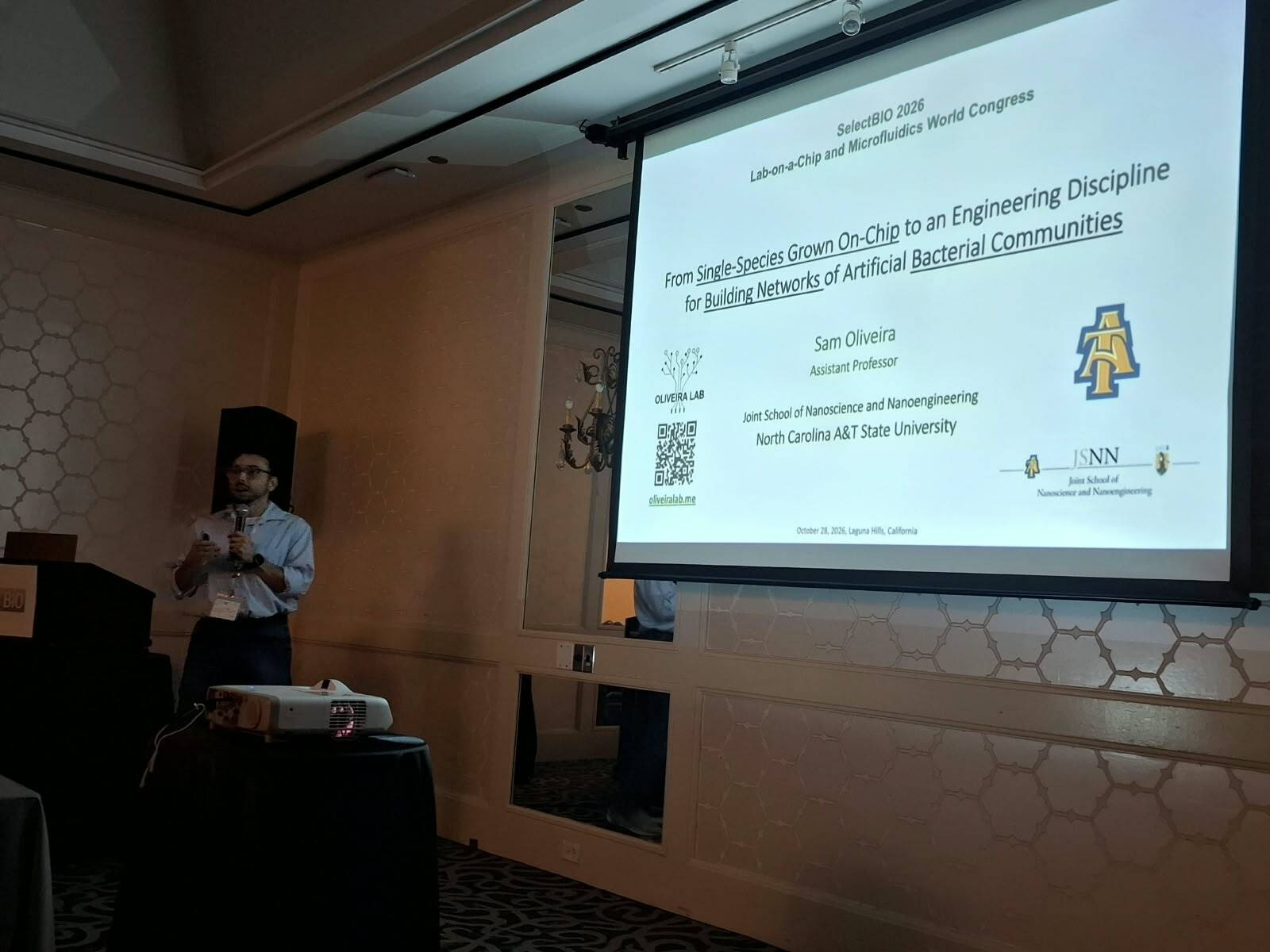
At the Oliveira Lab, we’re exploring how microfluidics, microscopy, and computational tools can be used to better understand and quantify these behaviors.
That’s where our Biofilm Dispersion Hackathon Challenge comes in!
How can we use computational tools to identify where dispersion occurs, track bacterial movement, and measure changes in biofilm structure over time?
As a sneak peek, we’ll be sharing selected microscopy videos and preliminary analysis materials from our ongoing development of Partaker 2, an extension of our recently published single-cell analysis tool. These materials highlight some of the challenges we’re working to address, including tracking microcolonies and quantifying changes in bacterial communities.
We’re inviting participants in the 2nd Computational Biotechnology Hackathon to explore this challenge, develop creative computational approaches, and contribute new ideas to an active area of research.
📅 November 7, 2026 | 9:00 AM – 5:00 PM
📍 Joint School of Nanoscience and Nanoengineering (JSNN) | Hybrid participation available
Ready to take on the challenge?
Research inspiration: Chou, T. K.-T., et al. (2026). Self-generated hydrogel ejects bacterial cells for localized biofilm dispersion. Nature Microbiology. https://doi.org/10.1038/s41564-026-02413-4

Member comments
Sign in to join the discussion. Commenting is available to verified lab members. Account help.